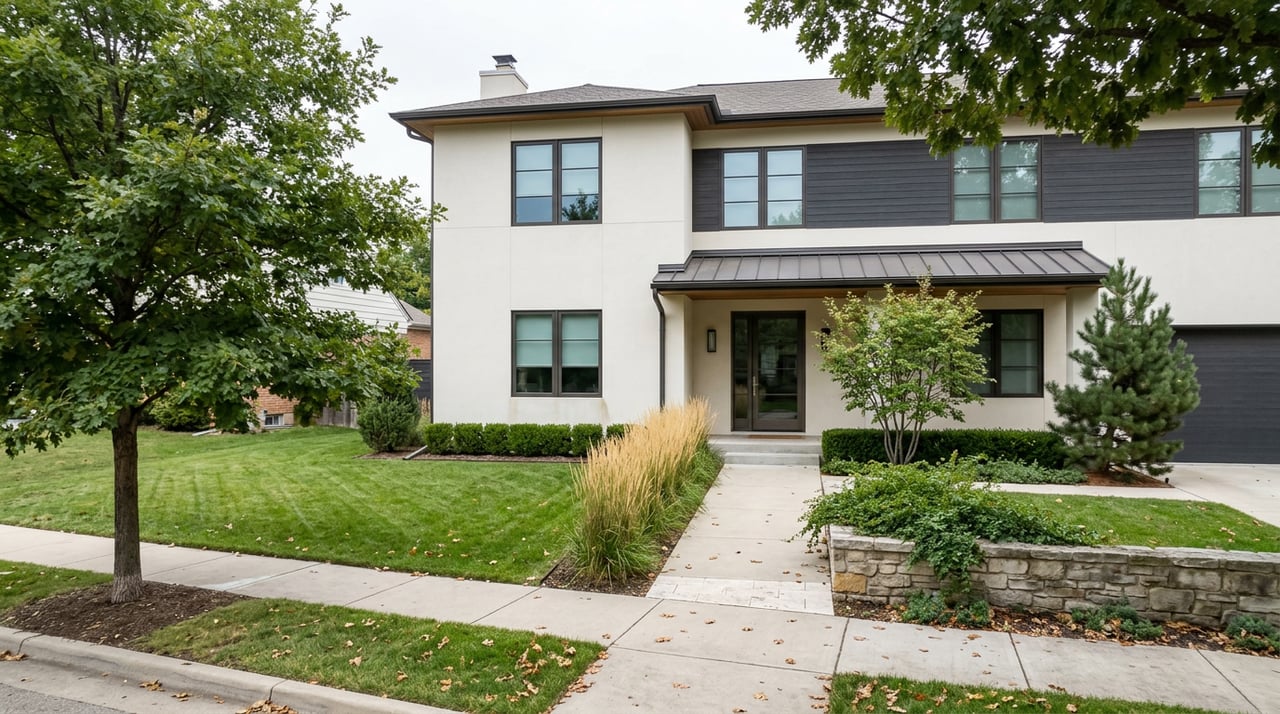
"You're getting beaucoup bedrooms, beaucoup bathrooms, and lots of glitz," a Cory-Merrill neighborhood association officer once told a Westword reporter, describing the scrape-built houses rising over his neighbors' brick ranches. The quote is old enough that the reporter treated ten scrape-offs in a single year as a novel trend worth investigating. The house he was describing could have been listed last month.
That's the thing about Cory-Merrill that a median price can't tell you. This isn't a neighborhood transitioning from old to new. It's a neighborhood where three distinct generations of housing have been selling side by side, on identically sized parcels, for a long time, and the math of comparing them the way most buyers compare houses simply doesn't work.
Three markets, one median
Pull up any online home-value tracker for Cory-Merrill this year and you'll find numbers that argue with each other inside the same report. One recent 30-day reading showed a median sale price of $1,225,000, down more than 40 percent from the same period a year earlier, on a sample of just 14 closed sales. In that same window, the median days on market fell to 7, down from 70 the year before, a swing large enough to suggest something changed overnight. And yet the same data showed 42.86 percent of active listings taking a price cut, up sharply from the prior year, while 35.71 percent of homes that did sell went for more than asking.
Those two facts don't describe a single market speeding up. They describe three different housing markets being blended into one number. Scrape-ready lots and freshly built custom homes are moving fast, often above list, because buyers and builders are bidding on land and finished square footage respectively. Meanwhile, dated homes that haven't been renovated or rebuilt are sitting, getting price reductions, because they're competing against both categories at once. Combine sales across these different housing types and the median can swing from month to month, not because Cory-Merrill's market is volatile, but because the sample size is small enough that a handful of scrape sales can move the number sharply while active-listing trends point in another direction.
A separate snapshot taken in June 2026 put the picture in sharper focus: 27 recently sold homes at a median list price near $1.2 million, with typical homes spending 46 days on market and drawing about one offer. That's a calmer number, but it still combines three categories of transaction that behave nothing alike.
The lot was decided before the house was
The reason Cory-Merrill ended up with this particular problem traces back further than any recent listing. The neighborhood sits on land that was once part of the Town of South Denver, founded in 1858, and subdivided into residential plots between 1883 and 1886 into Electric Heights on the west side and Coronado and Coronado Heights on the east. Those original plats laid out lots that run 6,000 square feet or larger, roomier than the narrower parcels platted just to the north and west in what became Bonnie Brae and Washington Park.
| Neighborhood | Typical platted lot size |
|---|---|
| Cory-Merrill | 6,000+ sq ft |
| Bonnie Brae / Washington Park | 3,000 to 4,500 sq ft |
That difference in dirt, not any recent shift in taste, is why builders gravitate here. A lot wide enough to support a three-car garage and a main-floor primary suite is worth pursuing whether the house currently sitting on it is a $580,000 original or a tired 1950s ranch nobody has touched. In neighborhoods with narrower lots, a scrape has to fight the parcel geometry. In Cory-Merrill, the parcel was built for it.
Same dirt, three generations of houses
The first wave of construction went up quickly after the 1880s platting, and by 1889 the area already counted around 100 homes. The next wave came after World War II, when a builder named Les Tremblay bought up property near the neighborhood's namesake schools and built solid brick and flagstone ranches, priced and sized for returning veterans using GI Bill financing. Those Tremblay ranches, as they're still called locally, came with attached garages and full basements, generous by the standards of postwar construction elsewhere in the city.
Many of them didn't stay standing. As families outgrew the floor plans, owners and builders began scraping the smaller Tremblay houses and replacing them with larger homes, a pattern that has continued long enough that it no longer counts as news inside the neighborhood. That Westword feature counted ten scrape-offs in the neighborhood in a single year, at a time when the practice was still novel enough to draw a reporter's attention. The Cory-Merrill Neighborhood Association, now more than 30 years old, has spent that stretch doing what it still does today: showing up at zoning hearings, distributing information about variances, and working directly with developers.
The result today is a housing stock split roughly into three eras standing on the same footprint: a shrinking handful of 1920s originals, the postwar Tremblay-style brick ranches, and custom homes built from 2003 forward. Current listings across the neighborhood span from around $580,000 for an untouched original up to nearly $3 million for a fully custom rebuild, sometimes on the same block, sometimes on the same street.
Comparing those homes on price per square foot treats them as the same product measured at different sizes. They aren't. A 1950s ranch's price reflects a structure that a buyer may plan to replace. A 2023 custom build's price reflects finished square footage that isn't going anywhere. Dividing both by their square footage and comparing the result answers a question nobody is actually asking.
A price floor that isn't about the house
One factor holds a floor under values across all three generations regardless of condition: Cory Elementary's Highly Gifted and Talented program, run through what the district calls an Integrated Cluster Model, which keeps gifted students in advanced coursework while remaining in general classrooms with their peers. Demand for access to that specific program can support prices inside the Cory attendance boundary, whether a buyer is considering a scrape-ready lot or a fully finished custom home. That demand doesn't discriminate by housing generation, which is part of why even the oldest, smallest homes in the neighborhood rarely sit unsold for long once they're priced to reflect the lot underneath them.
What to actually check before you trust a number
Before leaning on a portal's median price or price-per-square-foot figure for Cory-Merrill, it's worth checking a few things that the aggregate numbers hide:
- Lot dimensions, available through the county assessor's parcel records, tell you whether you're looking at a standard-width lot or one of the wider parcels that command builder interest regardless of the current structure.
- The generation of the house, whether original, Tremblay-era ranch, or post-2003 custom build, tells you what you're actually buying: land value, a renovation candidate, or finished square footage.
- Whether comparable sales nearby were land deals or home purchases. A scrape-ready lot selling for a few hundred thousand under a finished new build a block away isn't a sign of a soft market. It's two different products.
- Days on market relative to listing type. A dated ranch sitting for 60 days while a custom build down the street sold in a week isn't a contradiction. It's the three-market pattern working exactly as expected.
None of this requires abandoning the aggregate data entirely. It requires reading it with the knowledge that Cory-Merrill's median combines sales across different housing types, so it doesn't describe a single housing segment.
FAQ
Does a wider lot automatically mean a house is a scrape candidate? Not necessarily. Lot width makes a scrape more feasible from a construction standpoint, but zoning setbacks, height limits, and the condition of the existing structure all factor into whether a rebuild pencils out for a given buyer or builder.
Is price per square foot ever a useful comparison in Cory-Merrill? It works when comparing homes from the same generation and similar finish level. It breaks down when comparing a scrape-ready ranch against a finished custom build, since the two aren't pricing the same thing.
How would I find out which generation a specific house belongs to? Denver County assessor records typically list the year built, and that single data point, cross-referenced with the address, is usually enough to place a house in the original, Tremblay-era, or post-2003 category.
If you're comparing Cory-Merrill against other close-in Denver neighborhoods, or trying to figure out whether a specific listing is priced for its land or its structure, that's exactly the kind of read The Galansky Group does before a client ever writes an offer. Request a Concierge Consultation and we'll walk through the parcel, the generation, and the comparables that actually apply.