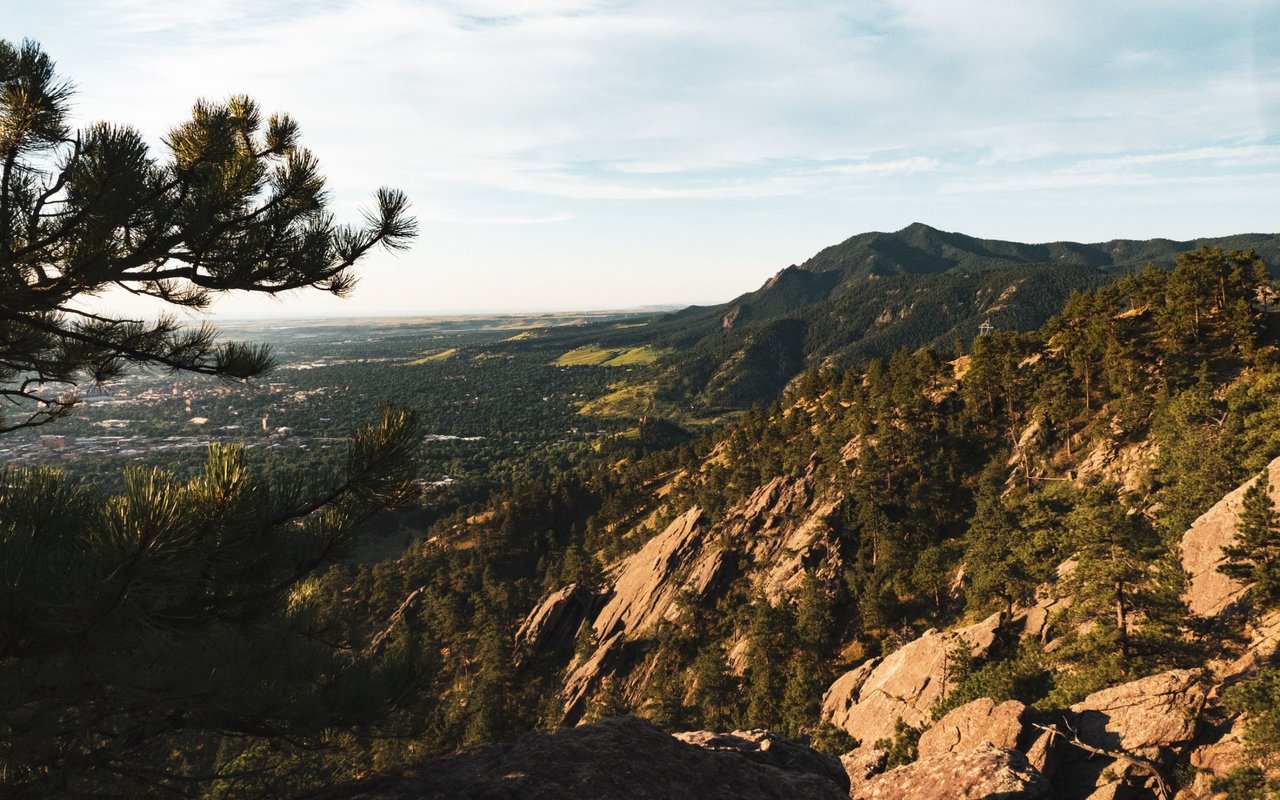
Every writeup of this neighborhood reaches for the same line: a quiet, tree-lined pocket next to the University of Denver, walkable to campus energy, anchored by a Romanesque observatory. It's accurate. It's also the kind of description you could paste onto half a dozen Denver neighborhoods and change only the school name.
The University Park Community Council, the volunteer group that runs the neighborhood's actual calendar, ran its own resident survey and published the results. The numbers describe a different place than the postcard. Eighty-two percent of respondents had attended a UPCC event. Eighty-six percent of households had dogs. Over half had lived there more than ten years, and nearly a third had been there more than twenty. This isn't a transient, campus-adjacent rental strip. It's a neighborhood where people stay, walk dogs, and show up to the same handful of gatherings year after year.
The survey also asked which park people actually use. Observatory Park itself came out on top, with McWilliams Park (the one with the purple dinosaur in the playground, known locally as Dinosaur Park) close behind, and a full quarter of respondents saying they use Prairie Park regularly too. That's three parks in regular rotation for one neighborhood, which tells you more about daily life here than any line about tree canopy.
The Calendar That Runs on Foot Traffic, Not Foot Traffic to Campus
Ask UPCC which of its own events draws the biggest crowd and the answer isn't a lecture series or a gallery opening tied to DU. It's the Fourth of July parade, followed closely by the summer food truck nights and December's Sing and Sleigh Bells gathering at the observatory. These are neighborhood-built, neighborhood-run events, and 2026 has all three on the books.
The Third Thursday Food Truck Rallies return this summer at Accelerated Schools, 2160 S Cook St, from 5:30 to 7:30 p.m. on the third Thursday of June, July, and August. Lawn games are allowed. Bringing your own drinks is fine. The event runs on the same low-key premise every year: park a truck, bring a blanket, let the kids run around a school lawn on a weeknight.
The Fourth of July parade takes over E. Warren Avenue between S. Fillmore and S. Milwaukee Streets from 10 a.m. to noon, with the University Park PTA handing out Otter Pops to anyone who shows up in red, white, and blue, wagon or bike optional. The Neighborhood Yard Sale follows in mid-July, running July 10 and 11 from 8 a.m. to 3 p.m. across the neighborhood. And when the weather turns, Sing and Sleigh Bells happens right at the observatory itself, December 6 from 3 to 5 p.m., turning the same lawn that hosts summer star parties into a holiday gathering spot.
UPCC also holds two general meetings a year, on the first Wednesday of April and October, where the agenda is as local as it gets. This spring's meeting covered Denver's Resilient Landscapes and water-wise landscaping guidance from the city's forestry department, an update from Xcel Energy on renewing its Denver franchise agreement, and district updates from Councilman Paul Kashmann. It's not a headline event, but it's where the neighborhood's actual civic business gets done, and it's open to any resident who wants to sit in.
The Second Calendar Nobody Mentions in the Same Breath
Separate from the neighborhood association's calendar, Observatory Park runs on the rhythm of its own namesake landmark. The Chamberlin Observatory, built in 1890 and still owned and operated by the University of Denver's Department of Physics and Astronomy, has hosted public nights since 1894. The Denver Astronomical Society runs those nights today, and they require advance registration through the society's own site because seating around the 20-inch refracting telescope is limited. Beyond the ticketed public nights, DAS also hosts monthly open houses on the south lawn, free and open to anyone who wants to bring a telescope of their own, no registration required.
That lawn has its own etiquette. During the monthly star parties, flashlights are off limits after dark, since even a phone screen ruins night vision for everyone trying to see through the eyepiece. It's a small rule, but it's the kind of detail that separates a neighborhood park from a place people actually gather to look at the sky together, year after year, regardless of what else is happening on campus that week.
The Street That Slowed Down and Stayed That Way
East Evans Avenue splits the DU campus in two, and for years it carried a 30 mph speed limit through a corridor where students and staff cross constantly to get between the north and south sides of campus. That changed in the summer of 2024, after a crash near South High Street injured three students in a crosswalk, with sun glare cited as a factor. Denver's Department of Transportation and Infrastructure worked with DU to drop the limit on that third-of-a-mile stretch, between University Boulevard and High Street, to 25 mph, and paired the new limit with rumble strips at the edges of the zone and pavement markings, a combination DOTI said it hadn't used together anywhere else in the city before.
The slow zone is still there, and it's easy to miss if you're not looking for the signage, but it changed how that stretch of Evans drives day to day, which matters if your daily walk, school run, or dog loop crosses it. It's also a small case study in how a single crash can rewrite a stretch of road faster than most infrastructure projects move, when a university and a city department decide to act on it together.
Evans itself carries more than just the slow zone. The stretch running through the neighborhood holds an eclectic strip of everyday eating options, including Jerusalem Restaurant and Illegal Pete's, the kind of places that don't show up in glossy neighborhood profiles but that residents actually walk to on a Tuesday night.
What the Numbers Add Up To
None of this reads like a college town in the way that phrase usually gets used. A college town implies turnover: students in, students out, a business district that rises and falls with the academic calendar. What UPCC's own survey describes is closer to a settled residential neighborhood that happens to share a border and an observatory with a university. People who've lived there twenty years still show up to the same July 4 parade. Families with school-age kids split close to evenly between the neighborhood's public and private school options. The majority of working residents are either working from home or within five miles, which explains why a Tuesday food truck night and a Thursday star party both draw a crowd instead of one or the other going quiet during the week.
If you already live inside these boundaries, this is the calendar that's actually running under your feet this year. If you're the kind of homeowner who's been here long enough to remember when the observatory's monthly open house felt like a hidden secret rather than a fixture, you already know the postcard version was always incomplete.
If the time ever comes to think about your own place in this neighborhood, whether that's a renovation that respects the block's older bungalow lines or eventually listing a home near Observatory Park, The Galansky Group is glad to have that conversation when you're ready.